Italians eat a light, sweet breakfast, almost always enjoyed standing at a bar. The classic Italian breakfast, known as colazione italiana, consists of an espresso or cappuccino paired with a cornetto (a soft, flaky pastry similar to a croissant) or a slice of cake. It is quick, simple, and deeply satisfying. Below, we answer the most common questions about Italian breakfast food and morning traditions, from what people drink to how habits change across different regions.
What does a typical Italian breakfast actually look like?
A typical Italian breakfast is small, sweet, and eaten quickly, usually at the counter of a local bar. Most Italians start the morning with a coffee and one pastry, consumed in just a few minutes before heading to work or school. There is no elaborate spread, no eggs, no toast with toppings. Just coffee, something sweet, and a quick exchange with the barista.
The word “bar” in Italy does not mean a pub. It is the neighbourhood café where locals gather every morning, often visiting the same spot for years. The ritual is social as much as it is nutritional. You greet the barista by name, drink your espresso standing up, and start the day.
At home, the routine is similar but simpler. Many Italians brew a moka pot of coffee, pour it into a cup, and have it with a biscuit, a slice of homemade cake, or bread with jam. Children often have warm milk with a little coffee mixed in, alongside a sweet biscuit or a piece of bread with Nutella.
What do Italians drink in the morning?
Coffee is the heart of the Italian morning. The most common choices are espresso, cappuccino, and caffè latte, each with its own unwritten rules about when it is appropriate to drink it. Espresso is drunk at any time of day. Cappuccino and other milk-based coffees are strictly morning drinks in Italian culture, almost never ordered after 11am.
Here is a quick guide to the most common Italian morning drinks:
- Espresso: A short, concentrated shot of coffee. The foundation of Italian coffee culture.
- Cappuccino: Equal parts espresso, steamed milk, and milk foam. Creamy and warming, perfect alongside a pastry.
- Caffè latte: More milk, less foam than a cappuccino. Often drunk at home from a large cup or bowl.
- Caffè macchiato: An espresso with just a small splash of milk. For those who want a little softness without losing the strength.
- Orzo: A caffeine-free drink made from roasted barley. Common for children or those avoiding caffeine.
Ordering a cappuccino after lunch in Italy will earn you a puzzled look from the locals. Milk-heavy drinks are considered too heavy on the stomach after a meal. In the morning, though, they are completely at home.
What are the most popular Italian breakfast pastries?
The cornetto is the most popular Italian breakfast pastry by far. It is a soft, slightly sweet, buttery pastry that comes plain or filled with jam, custard cream, or chocolate. Unlike a French croissant, it is less flaky and a touch sweeter, making it an ideal companion to a strong espresso or cappuccino.
Beyond the cornetto, Italian bars and bakeries offer a range of morning pastries depending on the region:
- Brioche: In Sicily and the south, a soft, enriched brioche bun is the morning staple, sometimes served with granita in summer.
- Maritozzo: A Roman sweet bun filled with whipped cream, traditionally eaten in the morning.
- Bombolone: An Italian doughnut, filled with custard or jam, popular across central Italy.
- Crostata: A slice of homemade jam tart, often found in homes rather than bars.
- Biscotti: Dunked into a caffè latte at home, particularly common among older generations.
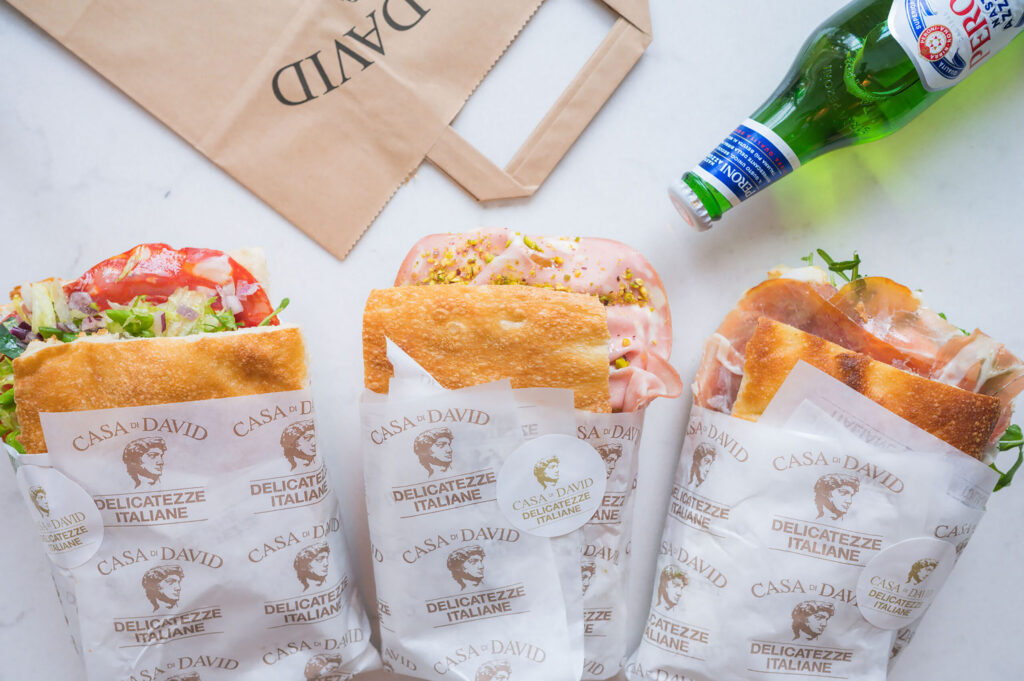
Focaccia also appears at the breakfast table in certain regions, particularly in Liguria, where a warm, olive-oil-drizzled slice is a perfectly normal morning choice. At Casa di David, our focaccia is baked fresh every morning by David himself at our corner deli on Singel, and it has become a favourite morning ritual for many Amsterdam locals.
Do Italians ever eat a savoury breakfast?
Savoury breakfasts are not the Italian norm, but they do exist in certain regions and contexts. In Liguria, focaccia with olive oil is a classic morning food, eaten alongside a coffee at the local bar. In parts of Tuscany and Emilia-Romagna, leftover bread, cold cuts, or cheese might appear on the breakfast table at home, though this is more of a rural or older-generation habit than a widespread urban custom.
For most Italians, especially in cities, the morning is sweet. The idea of a full savoury breakfast (eggs, bacon, beans, the kind you find in northern Europe) is seen as a very foreign concept. That said, food culture in Italy is always tied to place and family tradition, so what counts as “normal” varies more than the stereotype suggests.
How does breakfast change across different Italian regions?
Italian breakfast traditions shift noticeably from north to south. The further south you go, the sweeter and more indulgent the morning meal tends to become. In Sicily, a summer breakfast might be a brioche bun filled with almond granita, cold, sweet, and refreshing before the heat of the day sets in. In Naples, the sfogliatella, a shell-shaped pastry filled with ricotta and citrus, is a morning institution.
In northern Italy, the breakfast bar experience is more restrained. A small espresso and a plain cornetto are the standard, consumed quickly and efficiently. In Liguria, as mentioned, focaccia plays a real role in the morning routine. In Rome, the maritozzo, a cream-filled bun, has enjoyed a revival and is now one of the most recognisable Roman breakfast foods.
At home across all regions, the moka pot is universal. Whatever the local pastry preference, the coffee ritual remains consistent throughout the country.
Why is breakfast so small and sweet in Italy?
Italian breakfast is small because lunch and dinner are the main events of the Italian food day. Italian food culture is built around shared, multi-course meals in the middle and end of the day. Breakfast is simply not the meal where Italians invest much time or appetite. It is functional: it gets you going and provides a moment of pleasure before the day begins.
The sweetness comes from history and practicality. Sugar and pastry were once considered an affordable, energy-efficient way to start the day. Over generations, this became a cultural habit. Italians do not feel the need for a protein-heavy morning meal because the real nourishment comes later, at the table with family or colleagues.
There is also something to be said for the pleasure of simplicity. A perfectly made espresso and a fresh cornetto, eaten at a bar you have visited every morning for twenty years, is its own kind of satisfaction. It does not need to be elaborate to be meaningful.
Where can you experience an authentic Italian breakfast in Amsterdam?
If you are in Amsterdam and want to start your morning the Italian way, our Casa di David Deli at Singel 434 is the place to go. Every morning, David bakes fresh focaccia by hand, soft, golden, and drizzled with good olive oil. Grab a coffee to go, pick up a slice of focaccia, and you have yourself a proper Italian morning, right on the canal.
Here is what you can expect at the Casa di David Deli:
- Freshly baked focaccia made every morning by hand
- Italian coffee to go, made the way it should be
- A relaxed, welcoming atmosphere just steps from the Singel canal
- Italian favourites available to take away
- A genuine taste of Italian morning culture in the heart of Amsterdam
And if you are in the mood for a full Italian evening later in the day, our main restaurant next door serves handmade pastas, wood-fired pizzas, and regional Italian dishes that have kept guests coming back for 50 years. You can book a table online, or simply come by and we will find a spot for you. Whether it is a quick morning coffee or a long dinner with friends, there is always room for you at Casa di David.