An Italian cornetto is a light, slightly sweet pastry that is the Italian version of a croissant. It is softer, less flaky, and often sweeter than its French counterpart, with a tender, brioche-like texture inside. Cornettos are typically filled with jam, custard cream, or chocolate, and they are the heart of the classic Italian breakfast. Below, we answer the most common questions about this beloved Italian pastry.
How is an Italian cornetto different from a croissant?
The main difference between an Italian cornetto and a French croissant is texture and sweetness. A cornetto is softer, doughier, and noticeably sweeter, with a tender crumb that is closer to a brioche than a flaky pastry. A croissant is made with more butter and uses a laminated dough technique that creates its distinctive crispy, layered exterior.
The dough of a cornetto also contains eggs and sometimes honey, which give it that characteristic golden colour and gentle sweetness. When you bite into a cornetto, it gives way gently. When you bite into a croissant, it shatters. Both are delicious, but they are genuinely different things. Italians are quite clear about this distinction, and rightly so.
What are the most popular cornetto fillings?
The most popular cornetto fillings in Italy are apricot jam, crema pasticcera (Italian pastry cream), and cioccolato (chocolate cream). These three are the classic trio you will find in virtually every Italian bar and café. A cornetto can also be served vuoto, meaning empty, which is simply the plain pastry without any filling.
- Marmellata di albicocche: apricot jam, the most traditional filling, sweet and slightly tart
- Crema pasticcera: a rich, vanilla-scented custard cream that fills the pastry generously
- Cioccolato: chocolate cream, a favourite especially among younger guests
- Vuoto: plain, no filling, often dusted with icing sugar and enjoyed with a cappuccino
- Nutella: increasingly popular, though purists may raise an eyebrow
In the south of Italy, you will sometimes find cornettos filled with pistachio cream or ricotta, which reflects the regional richness of Sicilian pastry tradition. The filling you choose often says something about where in Italy you grew up.
What makes a cornetto authentically Italian?
An authentic Italian cornetto is defined by its dough, its softness, and its connection to daily Italian life. The dough is enriched with eggs, sugar, and a small amount of fat, giving it a tender, slightly chewy texture. It is not as heavily buttered as a French croissant, and it is never meant to be crispy. Authenticity comes from simplicity and consistency, not from elaborate technique.
What also makes a cornetto authentically Italian is the ritual around it. It is not a pastry you eat at home on a lazy Sunday morning. It is something you eat standing at a bar counter, paired with a proper espresso or a foamy cappuccino, before the working day begins. The cornetto and Italian café culture are inseparable.
At Casa di David, we have been serving authentic Italian food in Amsterdam for 50 years, and we understand that Italian food culture is as much about the moment as it is about the ingredients. If you want to explore more of what we do, take a look at our Italian food stories for more on Italian traditions and dishes.
How do Italians traditionally eat a cornetto?
Italians traditionally eat a cornetto standing at the counter of a bar, paired with a short espresso or a cappuccino, as part of their morning breakfast ritual. This is called fare colazione al bar, and it is one of the most consistent daily habits across the whole country. The combination of a warm cornetto and a perfectly made coffee is the Italian breakfast.
The process is simple. You walk into the bar, greet the barista, order your cornetto and coffee, eat it quickly while standing or perching on a stool, and leave. The whole thing takes five to ten minutes. There is no lengthy brunch, no elaborate spread. Just a good pastry, a good coffee, and the start of a good day.
Italians rarely eat cornettos at home. The bar experience is part of what makes it special. Eating a cornetto at a table with a knife and fork would raise eyebrows across most of Italy.
Where did the cornetto originate?
The cornetto originated in Italy as a local adaptation of the Austrian kipferl, a crescent-shaped pastry that was already popular in Central Europe. When the croissant form arrived in Italy, Italian bakers adapted it to suit local tastes, making the dough softer, sweeter, and less buttery. Over time, the cornetto became entirely its own thing, deeply embedded in Italian food culture.
The word cornetto simply means “little horn” in Italian, referring to its curved shape. In Rome and much of central and southern Italy, the same pastry is often called a brioche, which can cause some confusion for visitors. In the north, particularly in Lombardy and the Veneto, cornetto is the standard term.
By the mid-twentieth century, the cornetto had become the defining Italian breakfast pastry, and it remains so today. It is one of those foods that feels completely Italian even though its origins are a little more complicated.
Can you make a cornetto at home?
Yes, you can make a cornetto at home, though it takes patience and a few attempts to get the texture right. The dough needs time to develop properly, and the shaping requires a gentle hand. That said, a homemade cornetto is a genuinely rewarding bake, and the result is far softer and more flavourful than anything you will find in a supermarket.
Here is a basic approach to making cornettos at home:
- Make the dough: combine flour, sugar, eggs, a little butter, milk, yeast, and a pinch of salt. Knead until smooth and elastic.
- Let it rise: cover the dough and allow it to rise at room temperature for at least two hours, or refrigerate overnight for better flavour.
- Roll and shape: roll the dough into a large circle, cut into triangles, and roll each triangle from the wide end to the tip to form the horn shape.
- Second rise: place the shaped cornettos on a baking tray and allow them to puff up for another hour.
- Brush and bake: brush with egg wash and bake at around 180 degrees Celsius until golden. Fill after baking if desired.
The key is not to rush the rising stages. The slow fermentation is what gives the cornetto its characteristic soft, slightly airy texture.
Where can you find a great cornetto outside Italy?
Outside Italy, finding a genuinely good cornetto can be a challenge. Most bakeries outside the country either do not make them at all or produce something that is closer to a generic sweet roll than a proper cornetto italiano. Your best bet is to look for Italian-run cafés, delis, and restaurants that take their pastry seriously and source or make their products with real Italian knowledge behind them.
In Amsterdam, we at Casa di David bring that Italian tradition to the city every day. Our corner deli, Casa di David Deli at Singel 434, is where you can find freshly made Italian pastries and bread crafted each morning, alongside proper Italian coffee to go. It is the closest thing to a real Italian bar experience you will find on the Amsterdam canals. Stop by, grab a coffee, and taste the difference that genuine Italian passion makes.
If you would like to experience the full Italian table, from a morning coffee at the deli to a proper Italian dinner on the Singel, we would love to welcome you. Book your table and let us show you what 50 years of Italian hospitality in Amsterdam looks like.
How Casa di David brings the cornetto to Amsterdam
We have been living and breathing Italian food culture in Amsterdam since 1976. Our roots go back to Nicoletta Gezzi, who arrived from Italy and built Casa di David on the Singel with warmth, passion, and a deep commitment to La Cucina Italiana Originale. That same spirit runs through everything we do today, now in its third generation of family ownership.
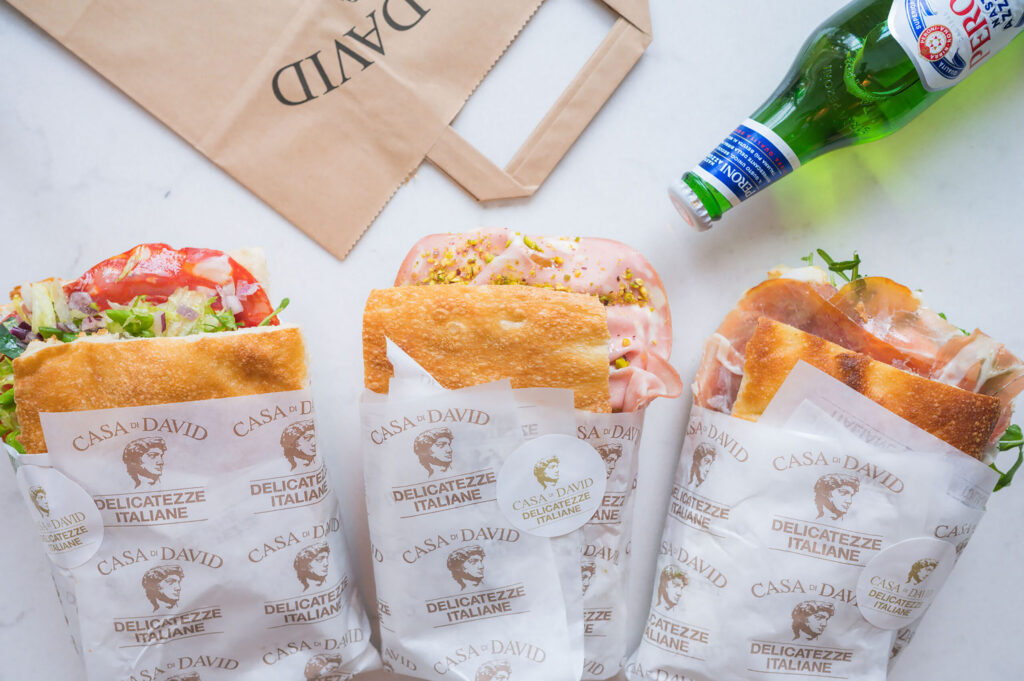
Our Casa di David Deli, right next door to the main restaurant, is where the Italian morning ritual comes to life in Amsterdam. David himself crafts the bread and focaccia fresh each morning, and the deli serves Italian coffee and Italian favourites to go in a relaxed, lively atmosphere that feels genuinely Italian rather than a copy of it.
- Freshly made Italian bread and pastries crafted each morning
- Proper Italian coffee, espresso and cappuccino, ready to go
- Located at Singel 434, steps from the main restaurant on the Amsterdam canals
- A warm, informal atmosphere that reflects real Italian bar culture
- 50 years of Italian food knowledge behind every bite
Whether you are curious about the cornetto or ready to sit down for a full Italian dinner, we are here for it. Come and visit us on the Singel and experience a little piece of Italy in the heart of Amsterdam.