A restaurant feels typically Italian when the food, atmosphere, and hospitality work together as one. It is not just about pasta on the menu or a Chianti bottle on the table. A genuinely Italian restaurant carries a sense of tradition, family, and warmth that you feel the moment you walk through the door. Below, we unpack the elements that make that feeling real.
What does ‘authentic Italian’ actually mean in a restaurant?
An authentic Italian restaurant is one where the food, the people, and the culture behind the cooking are genuinely rooted in Italian tradition. Authenticity is not a style or an aesthetic. It comes from using real Italian ingredients, following regional recipes passed down through generations, and serving food the way it is actually eaten in Italy.
In practice, this means handmade pasta rather than dried packet pasta, dough left to prove properly before hitting a wood-fired oven, and sauces built from a handful of quality ingredients rather than shortcuts. It also means the people in the kitchen and front of house understand Italian food culture from the inside, not just from a cookbook.
At Casa di David, we have been serving La Cucina Italiana Originale since 1976. Our story started when Nicoletta Gezzi arrived in Amsterdam from Italy and founded the restaurant on the Singel with her Dutch husband Warmolt. That Italian spirit has shaped everything we do, and today the restaurant is in its third generation of family hands. Visit our restaurant to taste what 50 years of Italian tradition feels like in the heart of Amsterdam.
How does the food menu reflect Italian identity?
An Italian restaurant menu reflects Italian identity through regional variety, seasonal ingredients, and dishes that have remained consistent for generations. Italian cuisine is not one thing. It is a collection of regional traditions, from Neapolitan pizza to Bolognese ragu to Sicilian seafood, each rooted in local produce and local habits.
A menu that feels genuinely Italian will typically show these qualities:
- Handmade pasta using traditional recipes
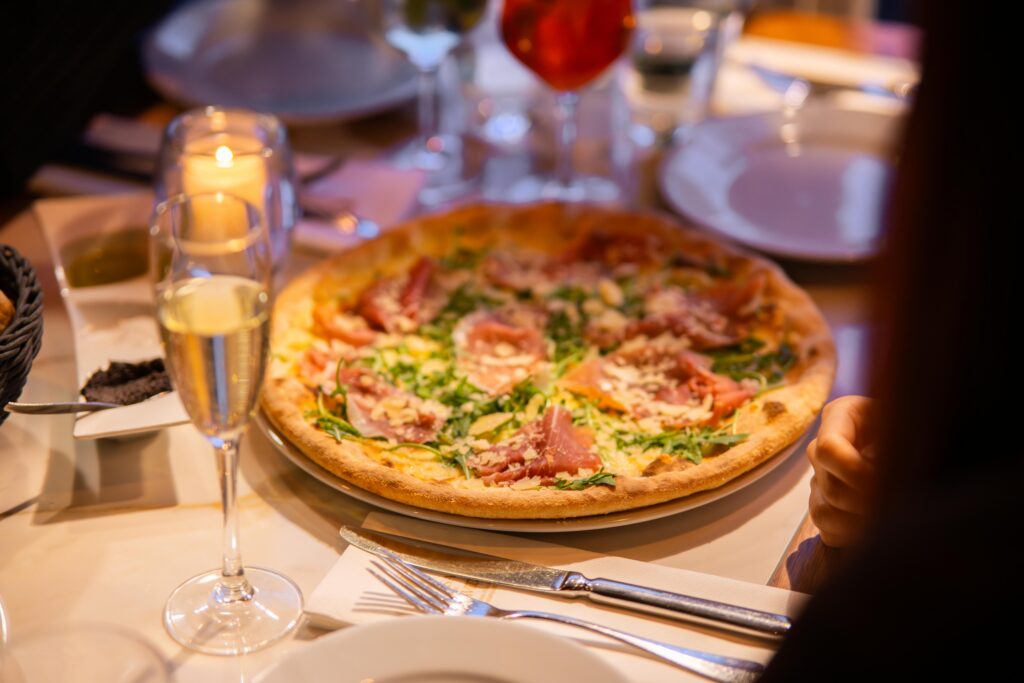
- Pizza cooked in a wood-fired oven with a properly proved dough
- Seasonal ingredients that change with what is fresh and available
- Imported Italian staples alongside quality local produce
- Dishes that are recognisable and consistent, not reinvented every season
At Casa di David, our menu is built around exactly these principles. We import core ingredients directly from Italy, and we complement them with local products like Texel lamb and North Sea fish. Our handmade bread comes out of the kitchen fresh every day. The menu at Casa di David reflects decades of consistency, not trends.
Why does atmosphere matter as much as the food?
Atmosphere matters in Italian dining because eating in Italy has always been about more than the food on the plate. It is about the table, the company, the noise, the warmth of the room. A great Italian meal in a cold or sterile space loses something essential. The setting is part of the experience.
A typically Italian restaurant atmosphere tends to be lively and informal. Tables are close together. Conversations overlap. The room smells of garlic and fresh bread. There is movement and energy. It feels like somewhere people actually want to be, not somewhere they are being managed through a dining experience.
Location plays a role too. Casa di David sits in a two-storey historic building at the corner of Singel and Beulingsloot, right on one of Amsterdam’s most beautiful canals. The setting is naturally warm and welcoming, and the bustling energy inside the restaurant matches it. It is the kind of place where you arrive for dinner and find yourself still there two hours later without noticing the time.
What role does hospitality play in Italian dining culture?
Hospitality is central to Italian dining culture. In Italy, feeding someone well is an act of care. A good host anticipates what you need before you ask, makes you feel at home, and treats the meal as something worth taking time over. This attitude, known broadly as ospitalità italiana, is what separates a truly Italian restaurant from one that simply serves Italian food.
In a restaurant setting, Italian hospitality shows up in small but meaningful ways: a server who guides you through the menu with genuine enthusiasm, a kitchen that takes pride in every plate, a room where you feel welcome whether you are a first-time visitor or a regular who has been coming for years.
One of our regular guests put it simply in a review: “Every time I come to Amsterdam I eat here, whether alone, with family or with business colleagues. Great food. Good atmosphere. Genuine passion.” That is what Italian hospitality looks like in practice. It is consistent, personal, and real.
How do wine and drinks complete the Italian experience?
Wine is not an afterthought in Italian dining culture. It is woven into the meal itself. In Italy, wine and food are chosen to complement each other, and a well-matched glass can elevate a simple pasta dish into something memorable. A typically Italian restaurant treats the wine list with the same care as the food menu.
This does not mean the list needs to be long or complicated. It means the wines on offer are chosen with the food in mind, and the staff can help you find something that works for what you are eating. Italian wines vary enormously by region, grape, and style, and a good Italian restaurant helps guests navigate that variety without making it feel like a test.
At Casa di David, we have a carefully curated wine selection and we occasionally host wine tastings where guests can explore Italian wines in a relaxed setting. We also host live music evenings with an opera singer, which adds another layer to the Italian atmosphere. These are not gimmicks. They are part of what makes an evening here feel genuinely Italian.
What separates a truly Italian restaurant from an Italian-inspired one?
The difference between a truly Italian restaurant and an Italian-inspired one comes down to depth of commitment. An Italian-inspired restaurant borrows the aesthetics and some of the dishes. A truly Italian restaurant carries the culture, the knowledge, and the consistency that only come from genuine connection to Italian food tradition.
Here is how to tell the difference in practice:
- The people behind the food: A truly Italian restaurant has people who understand Italian food from the inside, whether through family background, years of training in Italy, or long-term commitment to Italian culinary tradition.
- The ingredients: Real Italian ingredients matter. Not everything needs to be imported, but the key staples should be sourced properly and used correctly.
- The consistency: Authentic Italian restaurants do not reinvent their menus every season chasing trends. The classics stay because they work.
- The hospitality: Italian-inspired restaurants can look the part. Truly Italian restaurants make you feel something when you walk in.
How Casa di David brings authentic Italian dining to the table
Everything described above is what we have been doing on the Singel in Amsterdam since 1976. Casa di David is a family-run Italian restaurant now in its third generation, built on the foundations that Nicoletta Gezzi brought from Italy all those years ago. We are not trying to recreate Italy from the outside. We carry it from the inside.
Here is what you can expect when you visit:
- Handmade pasta and fresh bread made daily in our kitchen
- Pizzas cooked in a traditional wood-fired oven
- A menu rooted in regional Italian dishes, using imported Italian ingredients and quality local produce
- A lively, welcoming atmosphere in a historic canal-side building in central Amsterdam
- Warm, attentive service from a team with genuine passion for Italian food culture
- A curated Italian wine list, occasional live opera evenings, and wine tasting events
- 50 years of consistent quality and a loyal community of guests who keep coming back
If you want to experience what a typically Italian restaurant actually feels like, we would love to have you at our table. Book a table at Casa di David and come and taste the difference for yourself.