An authentic Italian restaurant is built on three things: real ingredients, traditional techniques, and genuine connection to Italian food culture. It is not about white tablecloths or elaborate presentations. Authenticity shows up in the dough, the sauce, the oven, and the people behind the pass. The questions below unpack exactly what to look for, from the kitchen to the atmosphere.
At Casa di David, we have been serving La Cucina Italiana Originale on the Singel in Amsterdam since 1976. Everything in this article reflects what we genuinely believe makes Italian food worth eating.
What ingredients separate authentic Italian cooking from imitations?
Authentic Italian cooking relies on a small number of high-quality ingredients used with precision and restraint. The difference between a genuine Italian dish and an imitation is rarely about complexity. It is about provenance, freshness, and knowing which ingredient does the heavy lifting in each recipe.
In traditional Italian kitchens, ingredients are not interchangeable. San Marzano tomatoes behave differently from standard plum tomatoes. Tipo 00 flour produces a pasta texture that ordinary plain flour cannot match. Extra virgin olive oil from a specific region carries a flavour profile that shapes the entire dish. These are not marketing details. They are the foundation of why Italian food tastes the way it does.
Seasonal ingredients also matter enormously. Italian cuisine is built around what is available and at its best right now, not what is convenient year-round. A menu that never changes with the seasons is a reliable sign that the kitchen is not cooking the Italian way.
At Casa di David, most of our ingredients are imported directly from Italy. We also work with local producers where the quality is outstanding, including Texel lamb and North Sea fish. The goal is always the same: the best ingredient for the dish, treated with respect.
How does a wood-fired oven change the taste of pizza?
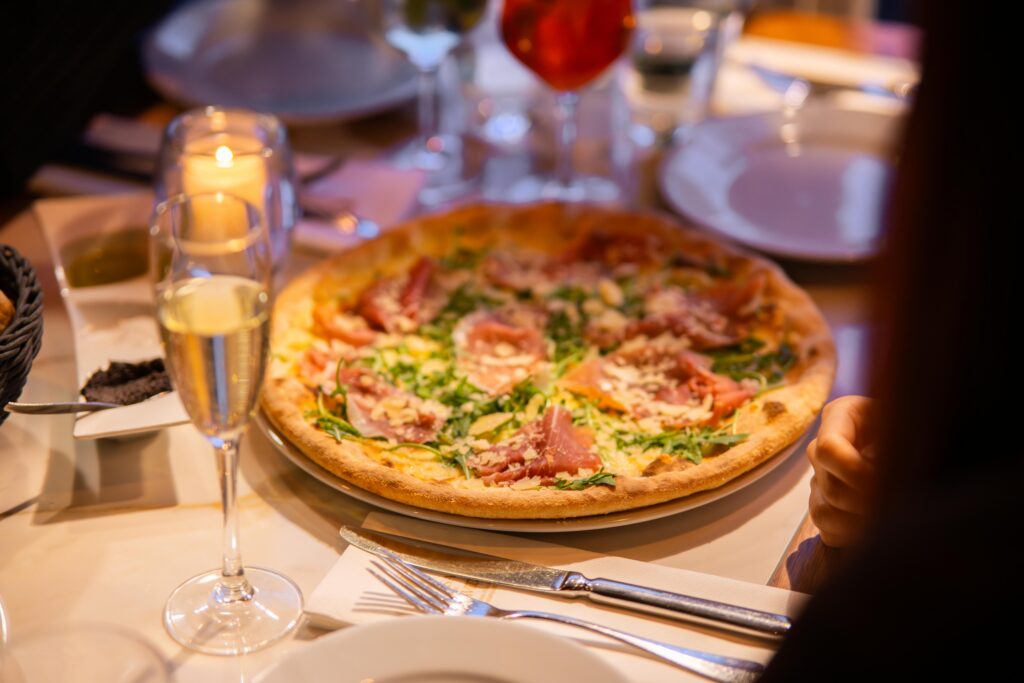
A wood-fired oven cooks pizza at temperatures that a conventional oven simply cannot reach, typically between 400 and 500 degrees Celsius. At that heat, the base cooks in under two minutes, creating a crust that is simultaneously charred, chewy, and light. The result is something no electric or gas oven can replicate.
The intense, dry heat of a wood-fired oven draws moisture out of the dough rapidly, which prevents the base from becoming soggy. The floor of the oven, usually stone or brick, conducts heat directly into the base while the dome radiates heat from above. This combination produces the characteristic leopard-spotted crust that is the hallmark of a properly baked Neapolitan-style pizza.
The wood itself also contributes. Burning hardwood like oak or fruitwood releases a subtle smokiness that infuses the crust and, to a lesser degree, the toppings. It is a flavour note that is almost impossible to achieve any other way.
Shortcuts in pizza-making are easy to spot once you know what to look for. A pale, soft base with no char is a sign of an oven that never reached the right temperature. An authentic wood-fired pizza should have a base that blisters and bubbles, with a crust that holds its structure even as the centre stays soft.
What is handmade pasta and why does it matter?
Handmade pasta is pasta shaped and cut by hand, often using only flour and eggs, without industrial extrusion or drying. It has a rougher, more porous surface than dried pasta, which means it holds sauce in a way that factory-made pasta cannot. The texture is softer, the flavour is richer, and the cooking time is shorter.
The difference between fresh handmade pasta and dried pasta from a packet is not simply a question of quality. They are genuinely different products suited to different dishes. A classic Bolognese clings better to fresh tagliatelle. A simple aglio e olio works beautifully with dried spaghetti. Authentic Italian cooking uses both, but knowing which to use and when is part of what separates a real Italian kitchen from a generic one.
Handmade pasta also reflects the regional diversity of Italian cuisine. Orecchiette from Puglia, pici from Tuscany, bigoli from the Veneto. Each shape has a history and a traditional pairing. When a restaurant makes its pasta by hand, it is making a statement about how seriously it takes that tradition.
How do regional Italian menus differ from generic Italian menus?
A regional Italian menu draws from the specific culinary traditions of particular areas of Italy, such as Emilia-Romagna, Sicily, or Campania. A generic Italian menu, by contrast, pulls together a greatest-hits selection of crowd-pleasing dishes without any real connection to place, season, or tradition.
Italy does not have a single national cuisine. It has dozens of regional ones, each shaped by local geography, climate, and history. The food of coastal Sicily looks nothing like the food of the Piedmont hills. A menu that treats Italy as one homogeneous culinary block is already telling you something about how seriously the kitchen takes authenticity.
Regional menus tend to be more focused and more seasonal. They include dishes that require specific knowledge and techniques rather than dishes chosen purely for broad appeal. You might find a slow-braised ossobuco alongside a simple bruschetta, or a fish dish built around what arrived fresh that morning. The menu reflects a real kitchen with a real point of view.
Generic menus, on the other hand, often feature the same twenty dishes you find in Italian restaurants across the world, regardless of where those dishes actually come from. Carbonara, tiramisu, and margherita pizza are all genuinely Italian. But a menu that goes no further than that is not telling you much about Italian food culture.
What role does atmosphere play in an authentic Italian dining experience?
Atmosphere is not decoration. In Italian dining culture, the environment, the noise level, the pace of service, and the feeling of being genuinely welcomed are all part of the meal. An authentic Italian dining experience is warm, lively, and informal. It feels like being fed by people who actually want you there.
Italian hospitality, or ospitalità, is not about formality. It is about generosity. A good Italian restaurant feels busy and social, with tables close enough together that you can hear other people enjoying themselves. The staff know the menu because they believe in it, not because they have memorised a script.
The physical setting matters too, but not in the way people sometimes assume. Authenticity does not require rustic wooden beams or checked tablecloths. What it does require is a space that feels lived-in and genuine rather than designed for Instagram. A restaurant that has been in the same location for decades, with the same dishes and the same familiar faces, carries an atmosphere that cannot be manufactured.
How can you tell if an Italian restaurant is truly authentic before you visit?
Before visiting an Italian restaurant, look for a small number of reliable signals that point to genuine authenticity rather than surface-level Italian branding. These signals are easy to check and consistently reliable.
- Read the menu carefully. A menu with fifty dishes covering every region of Italy is a warning sign. A focused menu with seasonal specials suggests a kitchen that actually cooks.
- Look at who is behind the restaurant. Family-run restaurants with a clear history and named founders tend to have more genuine investment in what they serve.
- Check how long they have been open. A restaurant that has been in the same location for decades has built a loyal following the hard way, through consistent quality.
- Look for specific Italian ingredients on the menu. Mentions of DOP products, named Italian regions, or specific imported ingredients suggest a kitchen that cares about provenance.
- Read recent reviews for the right signals. Look for guests who mention specific dishes, returning visits, and the quality of the food rather than the decor.
Word of mouth from people who eat Italian food regularly is also worth more than a high star rating on its own. A restaurant with a loyal base of returning guests who know Italian cuisine is a strong indicator of the real thing.
How Casa di David brings Italian authenticity to the table
We have been cooking traditional Italian food on the Singel in Amsterdam since 1976. Casa di David was founded by Nicoletta Gezzi, who arrived from Italy with a clear vision of what Italian hospitality should feel like. Fifty years later, the restaurant is now in its third generation of family involvement, and the cooking has stayed true to that original spirit throughout.
- Our pizzas are cooked in a traditional wood-fired oven, every service, every day
- Our pasta is handmade, using recipes that have not changed in decades
- Most of our ingredients are imported directly from Italy, supplemented by quality local products like Texel lamb and North Sea fish
- Our menu reflects genuine Italian regional traditions rather than a generic greatest-hits selection
- The restaurant is lively, informal, and welcoming, exactly as Italian hospitality should be
- We are open daily from 5 PM, with weekend lunch from 12:30 PM, right on the Amsterdam canals
If you want to experience what La Cucina Italiana Originale actually tastes like, we would love to have you at our table. You can book a table online, or browse our full menu before you visit. We are always happy to see new faces and old friends alike.