Yes, focaccia is absolutely eaten for lunch in Italy. In fact, it is one of the most common midday foods across many Italian regions, particularly in the north-west. Italians eat it on the go, at a bar, or as a light meal at home. Below, we answer the most common questions about focaccia, Italian lunch habits, and bread traditions so you know exactly what to expect from this beloved staple.
Where in Italy is focaccia most traditionally eaten?
Focaccia is most traditionally associated with Liguria, the coastal region in north-west Italy where Genoa sits. Ligurian focaccia, known locally as focaccia genovese, is the benchmark: flat, dimpled, golden, and drizzled generously with olive oil. It is so deeply embedded in the region’s daily life that locals eat it at any time of day, including early morning with a cappuccino.
Outside Liguria, focaccia traditions vary significantly by region. In Puglia, you find focaccia barese, which is thicker, topped with cherry tomatoes and olives, and has a softer, almost bread-like crumb. In Tuscany and Emilia-Romagna, flatbreads with similar characteristics go by different names entirely, such as schiacciata in Tuscany. Each region has its own version, shaped by local ingredients, climate, and habit.
What all these regional versions share is their role as everyday food. Focaccia in Italy has never been a restaurant luxury. It is bakery food, street food, and home food, made fresh each morning and sold by the slice.
What time of day do Italians eat focaccia?
Italians eat focaccia throughout the day, though lunch and mid-morning are the most common moments. In Genoa, it is famously eaten at breakfast, dunked into a cappuccino or milky coffee. By mid-morning it becomes a quick snack, and at lunchtime it serves as either a full meal or a side alongside other dishes.
The flexibility of focaccia is exactly what makes it so central to Italian food culture. It is portable, filling, and satisfying without being heavy. A thick slice topped with rosemary and sea salt, or a piece stuffed with cheese and cured meat, fits naturally into a busy Italian lunch break.
In the afternoon, Italians also reach for focaccia as a merenda, the Italian equivalent of an afternoon snack. It is one of those foods that does not belong to a single moment in the day, which is part of why Italian bread traditions around focaccia have lasted for centuries.
How is focaccia typically served at lunch in Italy?
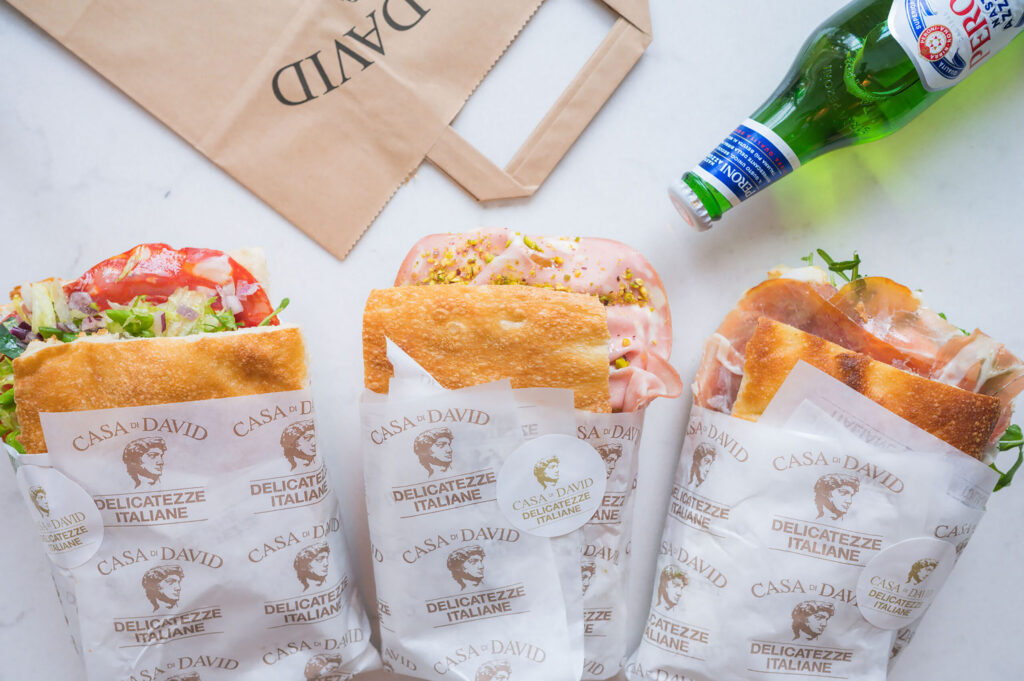
At lunch in Italy, focaccia is typically served either as a standalone meal by the slice or as an accompaniment to a simple plate of cold cuts, cheeses, or salad. In bakeries and delis, it is sliced to order, sometimes split and filled, and eaten standing up or taken away wrapped in paper.
In a sit-down setting, focaccia often replaces bread at the table. It arrives warm, brushed with olive oil, and acts as the bread basket equivalent. Italians tear it apart and use it to accompany antipasti or a light primo.
The key distinction from other breads is that focaccia is never an afterthought at an Italian lunch. It is intentional. The toppings, the oil, the texture, all of it is considered part of the eating experience, not just a vehicle for something else.
What are the most common focaccia toppings in Italian lunch culture?
The most common focaccia toppings in Italian lunch culture are rosemary and coarse sea salt, cherry tomatoes, olives, and caramelised onions. These are the classics, found in bakeries from Genoa to Bari. Olive oil is always present, either baked into the dough or drizzled generously on top before serving.
Beyond the basics, regional and seasonal ingredients play a big role:
- Rosemary and sea salt: the most traditional Ligurian version, simple and deeply flavourful
- Cherry tomatoes and olives: typical of Puglia, where the focaccia is thicker and more bread-like
- Caramelised onions: sweet, slow-cooked onions baked into the surface, common in Liguria
- Stracchino or crescenza cheese: used in focaccia di Recco, a thin, crispy version filled with soft cheese
- Cured meats: mortadella, prosciutto, or salami added after baking for a filled lunchtime slice
- Seasonal vegetables: courgette, aubergine, or peppers, depending on what is available
What unites all of these is quality olive oil and good dough. In Italian food culture, a focaccia topping is only as good as the base it sits on.
What’s the difference between focaccia and pizza in Italian food culture?
The key difference between focaccia and pizza in Italian food culture is their purpose and preparation. Focaccia is a leavened flatbread, eaten on its own as a snack or meal. Pizza is a dish built around a topping combination, traditionally baked at high heat in a wood-fired oven. Focaccia is bakery food; pizza is restaurant food.
Texturally, focaccia is thicker, softer, and more bread-like, with a characteristic dimpled surface that holds olive oil in small pools. Pizza dough is typically thinner and crisper, designed to support a layer of sauce, cheese, and toppings rather than to stand alone.
Culturally, the two also occupy different moments in Italian life. Pizza is an evening meal, social and celebratory. Focaccia is daily and practical, something you pick up on your way to work or grab at midday. In Italy, the two are rarely confused because they serve genuinely different roles in the food culture.
At Casa di David, we know both traditions well. Our wood-fired pizzas follow the same respect for dough and quality ingredients that you find in the best Italian bakeries, and our focaccia at the deli is made fresh each morning with that same care.
Can focaccia be eaten as a full meal or just a side?
Focaccia can absolutely be eaten as a full meal. In Italy, a thick slice of focaccia topped with tomatoes and olives, or filled with mortadella and cheese, is a legitimate and satisfying lunch for millions of people every day. It is not considered a snack in the way a biscuit or a handful of nuts might be. It is real food.
Whether focaccia works as a full meal depends on the version. A thin, lightly topped slice is more of a snack or accompaniment. A thick, generously filled piece of focaccia from a Puglian bakery, for example, is a meal by any reasonable measure.
In Italian food culture, there is no rigidity about this. Italians are practical about eating. If the focaccia is good and you are hungry, it is lunch. If you want something lighter, it sits comfortably alongside a salad or a bowl of soup. That flexibility is exactly why focaccia has remained such a central part of Italian eating habits across generations.
How does Casa di David bring Italian bread traditions to Amsterdam?
Every morning at Casa di David Deli, David himself bakes fresh focaccia from scratch. It is not a side project or an afterthought. It is a daily ritual, rooted in the same respect for Italian bread traditions that you find in the bakeries of Genoa or Bari. The deli is located right next to the main restaurant on the Singel canal, and it has become a genuine destination for anyone in central Amsterdam looking for authentic Italian focaccia.
Here is what you can expect when you visit:
- Freshly baked focaccia every morning: made by hand, with quality ingredients, following traditional methods
- Classic Italian toppings: rosemary, sea salt, olive oil, and seasonal variations that reflect what is good right now
- Italian coffee to go: because in Italy, focaccia and a good coffee belong together
- A relaxed, grab-and-go atmosphere: no fuss, no formality, just good Italian food in the heart of Amsterdam
- 50 years of Italian food knowledge behind every bite: Casa di David has been serving authentic Italian food since 1976, and that experience shows
If you want to explore more of what we do, take a look at our menu for the full picture, from handmade pastas and wood-fired pizzas in the main restaurant to the daily focaccia at the deli. And if you are ready to sit down for a proper Italian meal, you are very welcome to book a table with us on the Singel. We have been feeding Amsterdam for half a century, and we would love to welcome you too.