Focaccia and pizza are not the same thing, even though both are Italian flatbreads made from dough. The key difference lies in how the dough is made, how it is baked, and how it is eaten. Focaccia is a thick, oily, pillowy bread that is often eaten on its own or with simple toppings, while pizza is a thinner base designed to carry a combination of sauce, cheese, and toppings. Below, we answer the most common questions about these two Italian classics so you know exactly what you are getting next time you order.
Is focaccia just pizza without toppings?
No, focaccia is not simply a plain pizza. While both are made from yeasted dough, they are fundamentally different products with different textures, hydration levels, baking methods, and purposes. Focaccia is a bread first and foremost, while pizza is a meal built around a base designed to carry toppings.
Focaccia has a much higher hydration level in its dough, which gives it that soft, airy, almost spongy interior. It is typically pressed into a flat pan, dimpled with fingers, generously drizzled with olive oil, and baked until golden. The result is thick, chewy, and rich. Pizza dough, by contrast, is stretched thin and designed to crisp up quickly under high heat, creating a sturdy but light base for sauce and cheese.
Think of it this way: calling focaccia a pizza without toppings is a bit like calling a brioche a croissant without layers. They share some ingredients, but the intention, the technique, and the eating experience are quite different.
How does focaccia dough differ from pizza dough?
Focaccia dough contains significantly more water and olive oil than pizza dough. This higher hydration creates a wetter, stickier dough that bakes into a thick, soft bread with a tender crumb and a slightly crispy bottom. Pizza dough is leaner and drier, engineered to be stretched thin and baked at very high temperatures.
Here are the main differences between the two doughs:
- Hydration: Focaccia dough is typically 70 to 80 percent hydrated, while pizza dough sits closer to 55 to 65 percent.
- Olive oil: Focaccia dough is generously enriched with olive oil both inside the dough and poured over the top before baking. Pizza dough uses far less fat.
- Texture goal: Focaccia aims for a pillowy, bread-like interior. Pizza dough aims for a thin, chewy base that crisps at the edges.
- Proofing time: Focaccia often has a longer, slower proof, giving it that open, bubbly crumb structure.
- Baking vessel: Focaccia is almost always baked in an oiled pan. Pizza is baked directly on a stone or in a wood-fired oven.
At Casa di David, our pizzas are baked in a traditional wood-fired oven, which reaches temperatures that create that characteristic charred crust and smoky flavour. You simply cannot replicate that in a pan. Our full menu gives you a good sense of the range of wood-fired pizzas we serve.
Where does each dish come from in Italy?
Focaccia originates from Liguria, the coastal region of northwestern Italy, where the city of Genoa made it famous. Pizza, in its modern form, comes from Naples in southern Italy, where it was developed in the 18th and 19th centuries as a simple, affordable street food for working-class families.
Ligurian focaccia, known locally as fugassa, has been baked in that region for centuries. It was traditionally eaten for breakfast, dipped into a cappuccino or a glass of wine, and sold by the slice from bakeries throughout the day. The Genoese version is thin by focaccia standards but still far thicker and oilier than any pizza.
Neapolitan pizza, on the other hand, became iconic through its simplicity: a thin, soft base topped with San Marzano tomatoes, buffalo mozzarella, and fresh basil. This is the dish that eventually spread across the world and became the foundation of Italian cuisine as most people know it. Both dishes carry deep regional pride, and Italians from Liguria and Naples will happily debate which is superior.
What toppings and flavours are traditional for each?
Traditional focaccia toppings are simple and savoury: coarse sea salt, fresh rosemary, and a generous pour of good olive oil are the Ligurian classics. Other regional variations include olives, cherry tomatoes, caramelised onions, or thin slices of potato. The toppings complement the bread rather than define the dish.
Pizza toppings are far more varied and are the central element of the dish. A traditional Neapolitan pizza Margherita uses crushed San Marzano tomatoes, fresh mozzarella, and basil. From there, the combinations are almost endless: anchovies, cured meats, roasted vegetables, different cheeses, and seasonal ingredients all find their place on a pizza.
The key distinction is purpose. Focaccia toppings enhance a bread that is already delicious on its own. Pizza toppings are the meal. Remove the toppings from a pizza and you have a plain base. Remove the rosemary and salt from a focaccia and you still have something worth eating.
How are focaccia and pizza served differently in Italy?
In Italy, focaccia is primarily a bread and a snack. It is eaten throughout the day, often bought from a bakery or deli in the morning, enjoyed as a midday snack, or served alongside a meal. It is rarely the centrepiece of a sit-down dinner. Pizza, by contrast, is a full meal, typically served in a restaurant or pizzeria and eaten in the evening.
In Liguria, it is completely normal to eat focaccia for breakfast. Bakeries open early and locals line up for a warm slice straight from the oven. In the rest of Italy, focaccia appears as an antipasto, a table bread, or a quick street food. It travels well, holds up at room temperature, and is designed to be eaten with your hands without ceremony.
Pizza in Italy is a more structured occasion. A traditional Neapolitan pizza is served whole to one person, eaten at a table with cutlery or folded in quarters, and accompanied by a drink. The experience is relaxed but intentional. You sit down, you order a pizza, and that is your meal.
Which one should you order at an Italian restaurant?
Order pizza when you want a full, satisfying meal with bold toppings and a proper main course. Order focaccia when you want something to share, to snack on, or to enjoy alongside other dishes. In a good Italian restaurant, both have their place at the table and they serve genuinely different purposes.
If you are visiting us at Casa di David on the Singel, our wood-fired pizzas are a cornerstone of the menu and have been since the beginning. They are made with quality ingredients, many imported directly from Italy, and baked in a traditional oven that gives the crust its character.
How Casa di David brings focaccia and pizza to the table
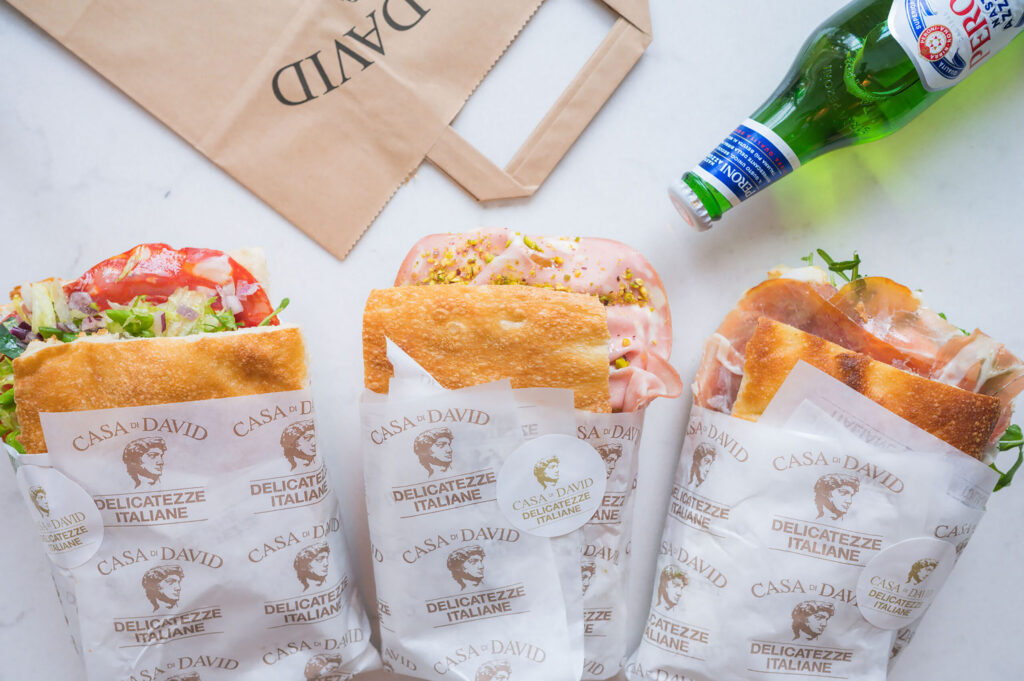
At Casa di David, both focaccia and pizza are part of our Italian story. We have been serving wood-fired pizza from the restaurant on the Singel for 50 years, and our focaccia has its own home right next door at Casa di David Deli, where David bakes it fresh every morning.
- Wood-fired pizza at the main restaurant, made with traditional Italian techniques and quality ingredients imported from Italy
- Fresh focaccia at Casa di David Deli, crafted each morning and available to take away with a coffee
- A warm, lively atmosphere in a historic canal-side building in the heart of Amsterdam
- A menu rooted in La Cucina Italiana Originale, with dishes that have stayed consistent across generations
- Open daily from 5pm, and on weekends from 12:30pm for lunch
Whether you are after a wood-fired pizza at the table or a slice of freshly baked focaccia to go, we are right here on the Singel. Come and taste the difference for yourself. You can book a table online and we will take care of the rest.