Yes, focaccia is a traditional Italian food with deep roots in Italian culinary history. It is one of Italy’s oldest breads, with origins that stretch back thousands of years to ancient civilisations along the Italian peninsula. Far from being a modern trend, focaccia has been a staple of everyday Italian life for generations, shaped by regional traditions and local ingredients.
Today, focaccia is enjoyed across Italy in dozens of regional forms, each reflecting the landscape, culture, and produce of its home region. In this article, we answer the most common questions about focaccia: where it comes from, how it differs from pizza, what makes it taste the way it does, and how it fits into Italian daily life. If you are curious about authentic Italian food and what makes it so enduring, read on.
Where does focaccia originally come from?
Focaccia originates from the Liguria region in northwestern Italy, particularly the city of Genoa, where it is known as focaccia genovese. Its roots, however, go much further back. Ancient Romans baked a similar flatbread called panis focacius, cooked directly in the ashes of a fire; the word focaccia itself comes from the Latin focus, meaning hearth or fireplace.
Long before pizza became famous, focaccia was the everyday bread of working people along the Ligurian coast. Bakers and fishermen would eat it in the morning with a glass of wine or dip it in the sea. It was humble, filling, and made from ingredients that were always at hand: flour, water, olive oil, and salt.
Over centuries, focaccia spread from Liguria to other parts of Italy, where each region adapted it to local tastes and traditions. What began as a simple hearth bread became one of the most beloved and varied breads in Italian cuisine.
How is focaccia different from pizza?
Focaccia and pizza share a common ancestor: both are Italian flatbreads made from leavened dough, but they are distinct in texture, purpose, and preparation. Focaccia is thicker, softer, and more bread-like, with a generous amount of olive oil worked into the dough and drizzled on top. Pizza dough is typically thinner, crisper, and designed to carry toppings rather than stand alone as a bread.
The key differences come down to a few practical points:
- Texture: Focaccia has a pillowy, open crumb with a slightly crisp crust. Pizza is denser and chewier, especially around the base.
- Olive oil: Focaccia uses significantly more olive oil, both in the dough and on the surface, which gives it its characteristic richness and flavour.
- Toppings: Traditional focaccia is topped simply: rosemary, coarse salt, olives, or onions. Pizza carries heavier toppings like tomato sauce, cheese, and cured meats.
- Eating occasion: In Italy, focaccia is often eaten as a snack, at breakfast, or as a bread alongside a meal. Pizza is typically a main course.
Both are wonderful in their own right, but focaccia is really its own category of Italian bread rather than a pizza variation.
What are the main regional varieties of focaccia in Italy?
Italy has a rich tradition of regional focaccia varieties, each shaped by local ingredients and customs. While Ligurian focaccia is the most internationally recognised, nearly every region of Italy has its own interpretation of this traditional Italian flatbread.
Some of the most notable regional styles include:
- Focaccia genovese (Liguria): The classic version: golden, oily, dimpled, and seasoned with coarse salt. Often eaten plain or with a thin layer of cheese.
- Focaccia di Recco (Liguria): A thinner, unleavened version filled with fresh cheese, named after the town of Recco near Genoa. It has protected geographical status in Italy.
- Focaccia barese (Puglia): Made with semolina flour and topped with cherry tomatoes, olives, and oregano. It is softer and moister than the Ligurian version.
- Schiacciata (Tuscany): A Tuscan flatbread very similar to focaccia, typically thinner and flavoured with olive oil and salt. In autumn, a sweet version is made with fresh grapes.
- Crescia (Marche and Umbria): A slightly different flatbread tradition, sometimes made with eggs and pecorino cheese, cooked on a griddle rather than baked.
This regional diversity is one of the things that makes Italian food so fascinating. The same basic idea (flour, water, oil, heat) produces something completely different depending on where in Italy you are standing.
What gives traditional focaccia its distinctive texture and flavour?
Traditional focaccia gets its distinctive texture and flavour from three main factors: generous amounts of good olive oil, a well-hydrated dough, and a slow rise. The olive oil is not just a topping; it is worked into the dough itself, which creates a soft, rich crumb and a slightly crisp, golden exterior.
The dough for authentic focaccia is wetter than standard bread dough, which encourages the development of large air bubbles during baking. Those characteristic dimples pressed into the surface just before baking trap pools of olive oil and seasoning, adding flavour in every bite.
Salt plays an important role too. Coarse sea salt on the surface does not just season the bread; it creates a subtle contrast between the crisp, salty crust and the soft interior. Rosemary is the most traditional herb used, though regional recipes vary widely.
The quality of the olive oil matters enormously. In Liguria, where focaccia culture is strongest, local olive oil has a delicate, slightly fruity flavour that complements rather than overpowers the bread. This is why focaccia made with good Italian olive oil tastes so different from imitations made with neutral or low-quality oils.
How is focaccia traditionally eaten in Italy?
In Italy, focaccia is everyday food, not a special occasion dish. In Genoa and along the Ligurian coast, it is common to eat focaccia first thing in the morning, often dipped in a cappuccino or a glass of wine. Bakeries open early to sell it warm, and locals pick it up on their way to work.
Throughout the day, focaccia is eaten as a snack, a light lunch, or a bread alongside a meal. In Liguria, it is sometimes used as a sandwich base, filled with cured meats, cheese, or vegetables. In Puglia, focaccia barese is often eaten as a street food, sold by the slice from bakeries and market stalls.
What is consistent across all regions is that focaccia is unpretentious and accessible. It belongs to the tradition of Italian cucina povera, simple, honest cooking that makes the most of a few quality ingredients. That is exactly why it has remained a staple of Italian daily life for so long.
Can focaccia be made authentically outside of Italy?
Yes, focaccia can absolutely be made authentically outside of Italy, as long as the right ingredients and techniques are used. The key is not geography; it is quality. Good olive oil, strong flour, sea salt, and a patient approach to the dough are what make focaccia taste the way it should. These ingredients are available anywhere in the world.
The biggest mistakes people make when baking focaccia outside of Italy are rushing the rise, using too little olive oil, and baking in a pan that is too small or too deep. Authentic focaccia needs room to spread, time to develop flavour, and enough oil to create that characteristic richness.
That said, there is something about eating focaccia made by someone who grew up with it, someone who has been making it the same way for years, using the same rhythm and the same instincts. That kind of knowledge is hard to replicate from a recipe alone.
How focaccia comes to life at Casa di David
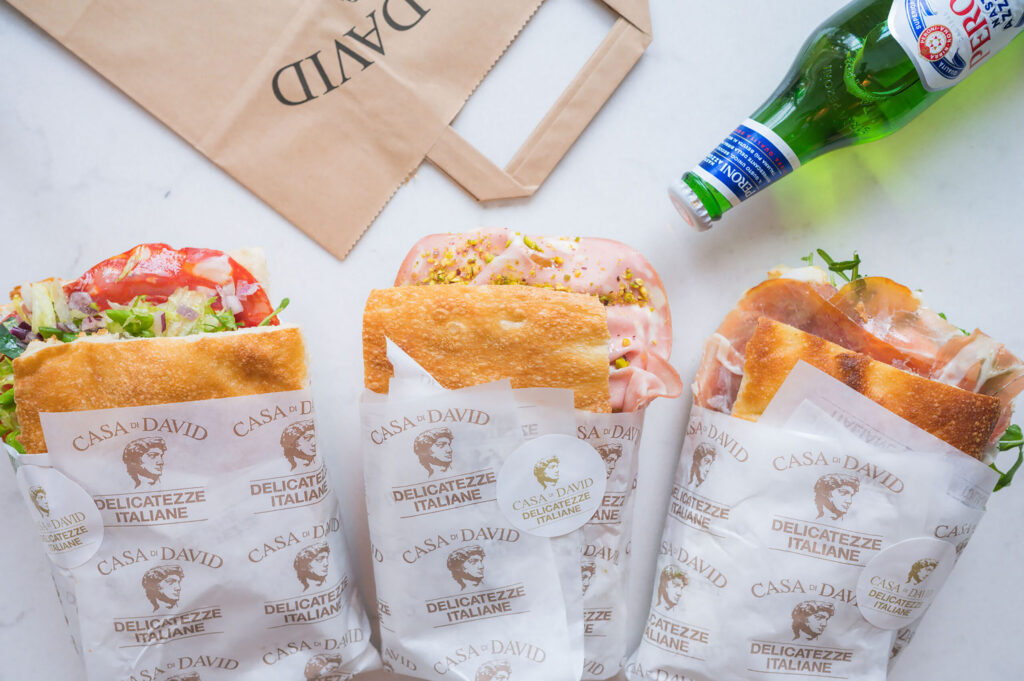
At Casa di David, focaccia is not an afterthought; it is one of the things we are genuinely proud of. Every morning, David himself crafts fresh focaccia at our corner deli, Casa di David Deli, located right next to the main restaurant on the Singel. It is made with care, using proper Italian technique and quality ingredients, and it is ready to enjoy from the moment the deli opens.
Here is what you can expect when you visit us:
- Freshly made focaccia crafted each morning by hand
- Classic Italian flavours using quality olive oil and traditional seasonings
- A relaxed, grab-and-go experience at the deli, or a sit-down meal at the main restaurant
- Italian coffee to go, alongside your focaccia, just like in Italy
- 50 years of Italian food tradition behind every bite, rooted in La Cucina Italiana Originale
The deli is a natural extension of everything Casa di David has stood for since Nicoletta Gezzi founded the restaurant on the Singel back in 1976. The same warmth, the same commitment to authentic Italian food, just in a more casual, everyday format.
Whether you stop by for a slice of focaccia and a coffee on your way through central Amsterdam, or you settle in for a full dinner at the restaurant, you are welcome here. Take a look at our Italian menu to see what else we have been cooking for half a century, or book a table and come and taste it for yourself. We would love to have you.