Focaccia is fundamentally different from regular bread because of its high olive oil content, its flat open shape, and the way it is made to be soft and chewy inside with a crisp, golden base rather than forming a structured loaf. It is an Italian flatbread with roots stretching back centuries, and its dough is designed to be wetter and more relaxed than typical bread dough. Below we answer the most common questions about what makes focaccia so special and how it compares to the bread you might already have on your kitchen counter.
At Casa di David, focaccia has been part of our story for decades. Our deli on the Singel crafts it fresh every morning, and once you have tasted it, you will understand why this humble Italian flatbread has stood the test of time.
How is focaccia dough different from regular bread dough?
Focaccia dough is wetter, oilier, and more loosely structured than regular bread dough. It uses a higher ratio of water and olive oil, which gives it a soft, open crumb and a pillowy texture. Standard bread dough is typically firmer and shaped to hold its form during baking, while focaccia dough is spread flat and left to relax rather than rise into a loaf.
The hydration level in focaccia dough is noticeably higher, often around 70 to 80 percent or more. This means the dough is sticky and difficult to knead in the traditional sense. Instead of working it hard, you fold and stretch it gently, allowing gluten to develop slowly. The result is a light, airy interior full of irregular bubbles.
Regular bread dough is engineered for structure. Focaccia dough is engineered for tenderness. That is the essential difference, and everything else about the bread flows from it.
Why does focaccia use so much olive oil?
Focaccia uses generous amounts of olive oil because the oil is not just a flavouring agent; it is a structural ingredient. Olive oil coats the gluten strands in the dough, keeping them soft and preventing the bread from becoming tough. It also creates the characteristic crispy bottom crust and adds the rich, savoury flavour that makes focaccia so satisfying to eat on its own.
In traditional Italian baking, olive oil is added to the dough itself and poured over the top before baking. The oil pooling in the dimples on the surface bubbles and fries slightly as the focaccia bakes, giving those golden, slightly crisp patches that contrast beautifully with the soft interior.
Good quality olive oil genuinely makes a difference here. The flavour of the oil comes through clearly in the finished bread, which is why Italian bakers are particular about which oil they use. It is one of those cases where a simple recipe depends entirely on the quality of its ingredients.
What gives focaccia its signature dimpled surface?
The dimples in focaccia are made by pressing your fingers firmly into the dough just before baking. This is not just for looks. The dimples serve a practical purpose: they stop the dough from puffing up unevenly in the oven, help the olive oil pool across the surface, and create little pockets where toppings can nestle and crisp up as the bread bakes.
After the dough has been spread out in the pan and had its final rest, you drizzle olive oil generously over the top and then use your fingertips to press all the way down to the base of the pan. The indentations hold their shape during baking, giving focaccia that instantly recognisable texture.
This step is also one of the most satisfying parts of making focaccia at home. The dough is soft and pillowy at this stage, and pressing into it feels almost like a small act of care before it goes into the oven.
Is focaccia the same as pizza dough?
Focaccia and pizza dough share similar basic ingredients, but they are not the same thing. Focaccia dough is wetter, uses more olive oil, and is designed to produce a thick, soft, chewy bread. Pizza dough is typically leaner and drier, made to be stretched thin and baked quickly at very high heat to produce a crisp, light base.
The two are close cousins rather than identical. In some regions of Italy, particularly in Liguria where the classic Focaccia Genovese originates, the distinction between a thick focaccia and a rustic pizza base can blur. But in practice, the texture, thickness, and purpose of the two are different enough that you cannot simply swap one for the other without adjusting the recipe.
Focaccia is a bread you eat on its own or with simple accompaniments. Pizza is a base built to carry a topping. That distinction in purpose shapes everything about how each dough is made.
What toppings are traditionally used on focaccia?
Traditional focaccia toppings are intentionally simple. The most classic version, Focaccia Genovese, uses nothing more than coarse sea salt, fresh rosemary, and plenty of olive oil. Other traditional Italian toppings include olives, cherry tomatoes, caramelised onions, and thin slices of potato. The philosophy is to complement the bread rather than overwhelm it.
Regional variations across Italy bring their own character:
- Liguria: Rosemary and sea salt, sometimes with a light sage oil
- Puglia: Cherry tomatoes, olives, and oregano pressed into the dough
- Bari: Focaccia Barese, made with semolina flour and topped with tomatoes and olives
- Genoa: The classic plain version, sometimes split and filled with cheese
- Veneto: Sweeter focaccia variations with dried fruit, particularly around Easter
The common thread across all of them is restraint. Focaccia is not a vehicle for heavy toppings. It is a bread that deserves to be tasted for what it is.
Can focaccia be eaten the same way as regular bread?
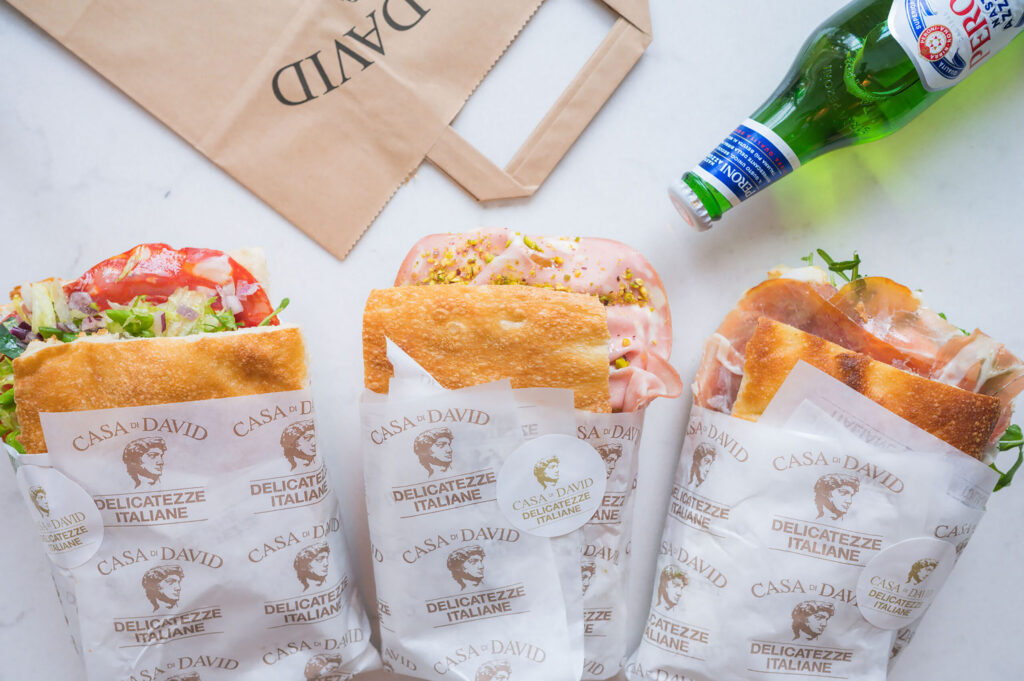
Yes, focaccia can be eaten in many of the same ways as regular bread, but it also has uses that are entirely its own. It works well as a side to soups and salads, torn and dipped into olive oil or used to scoop up sauces. Because of its thickness and texture, it also makes an excellent base for sandwiches, particularly filled with Italian cured meats, soft cheeses, or roasted vegetables.
In Italy, focaccia is often eaten as a snack on its own, straight from the bakery, still warm. It is a common breakfast food in Liguria, eaten alongside a cappuccino, which might surprise anyone who only thinks of it as a dinner bread.
Where focaccia differs from regular bread is in how it holds up. Its high oil content keeps it moist and flavourful for longer, and it does not dry out as quickly as a standard loaf. This makes it a generous bread, one that rewards you even the day after baking.
How should focaccia be stored and reheated?
Focaccia is best eaten on the day it is made, but it stores well for one to two days at room temperature, wrapped loosely in paper or a clean cloth. Avoid airtight plastic bags, which trap moisture and make the crust soft and sticky. For longer storage, focaccia can be frozen in slices and reheated directly from frozen.
To reheat focaccia and bring it back to life, follow these steps:
- Preheat your oven to around 180 degrees Celsius.
- Drizzle or brush the focaccia lightly with olive oil to refresh the surface.
- Place it directly on the oven rack or on a baking tray for five to eight minutes.
- Remove it when the base feels crisp again and the top is warm to the touch.
- Let it rest for a minute before eating, as the inside will be hot.
Avoid the microwave if you can. It warms focaccia quickly but leaves it soft and a little rubbery. The oven restores the contrast between the crispy base and the soft interior that makes focaccia so good in the first place.
How Casa di David brings focaccia to the table
At Casa di David, focaccia is not an afterthought. It is something we take seriously, and it has been part of our kitchen since the very beginning. Our deli, located right next to the main restaurant on the Singel, bakes fresh focaccia every single morning. David himself prepares it each day, using traditional methods and quality ingredients that reflect the same values behind everything we cook.
Here is what you can expect when you stop by:
- Freshly baked focaccia made each morning, available from the deli on Singel 434
- Classic Italian toppings prepared with care and quality ingredients
- A casual, welcoming grab-and-go experience with coffee to match
- The same authentic Italian approach that has guided our kitchen for 50 years
- A central Amsterdam location right on the canal, easy to reach from anywhere in the city centre
Whether you are picking up a slice on your way through the Singel or sitting down for dinner at the restaurant, you will taste the difference that genuine care makes. If you would like to experience it for yourself, you are very welcome to book a table at Casa di David and let us show you what Italian hospitality really means. We have been doing this for 50 years, and we are not planning to stop anytime soon.